

Bible Students, here are five Bible Verses about
Old Testament and Modern Day Journeys of Spiritual Israel.
Deuteronomy 20:16-17 (ASV) – But of the cities of these peoples, that Jehovah thy God giveth thee for an inheritance, thou shalt save alive nothing that breatheth; but thou shalt utterly destroy them: the Hittite, and the Amorite, the Canaanite, and the Perizzite, the Hivite, and the Jebusite; as Jehovah thy God hath commanded thee.
This passage represents one of the most challenging texts in Scripture, where God commands the complete destruction of Canaanite populations. The historical context reveals that these nations practiced child sacrifice, temple prostitution, and extreme idolatry that threatened to corrupt Israel’s covenant relationship with God. While deeply troubling to modern readers, this command was specific to a particular time, place, and purpose in redemptive history, preventing the spread of practices that would destroy Israel’s spiritual and moral foundation. It reflects the seriousness with which God viewed these corrupting influences in the ancient Near East.
1 Samuel 15:2-3 (ASV) – Thus saith Jehovah of hosts, I have marked that which Amalek did to Israel, how he set himself against him in the way, when he came up out of Egypt. Now go and smite Amalek, and utterly destroy all that they have, and spare them not; but slay both man and woman, infant and suckling, ox and sheep, camel and ass.
This divine judgment against Amalek stemmed from their unprovoked attack on Israel’s most vulnerable, the weak, elderly, and stragglers, as they journeyed from Egypt. The Amalekites represented persistent, generational opposition to God’s people and purposes. This command demonstrates God’s role as ultimate judge who sees the full scope of a nation’s wickedness and its future trajectory. The severity of the judgment reflected both past atrocities and the ongoing threat Amalek posed to God’s redemptive plan through Israel.
Joshua 6:21 (ASV) – And they utterly destroyed all that was in the city, both man and woman, both young and old, and ox, and sheep, and ass, with the edge of the sword.
The destruction of Jericho marked Israel’s first military conquest in the Promised Land, establishing that this was Jehovah’s war, not merely a human military campaign. The city had been given over to divine judgment after centuries of Canaanite wickedness, as God had told Abraham that the “iniquity of the Amorite” was not yet complete. This complete devotion to destruction (herem) signified that the conquest was an act of divine judgment rather than territorial greed, with the spoils going to God rather than enriching the conquerors.
Numbers 31:17-18 (ASV) – Now therefore kill every male among the little ones, and kill every woman that hath known man by lying with him. But all the women-children, that have not known man by lying with him, keep alive for yourselves.
This passage records the judgment against Midian following their orchestrated seduction of Israelite men into idolatry and immorality at Baal-peor, which brought plague upon Israel. The specific instructions reflect the threat that adult Midianite women posed, having been the agents of Israel’s spiritual corruption. While deeply disturbing, this must be understood within the framework of covenant judgment, where those who led Israel into sin faced consequences, while those who had not participated were spared and integrated into Israel’s community under the law’s protections.
Deuteronomy 7:1-2 (ASV) – When Jehovah thy God shall bring thee into the land whither thou goest to possess it, and shall cast out many nations before thee, the Hittite, and the Girgashite, and the Amorite, and the Canaanite, and the Perizzite, and the Hivite, and the Jebusite, seven nations greater and mightier than thou; and when Jehovah thy God shall deliver them up before thee, and thou shalt smite them; then thou shalt utterly destroy them: thou shalt make no covenant with them, nor show mercy unto them.
God’s command to destroy the Canaanite nations came with explicit reasoning: to prevent Israel from being led into the abominable practices of these cultures, including child sacrifice to Molech. This was not ethnic cleansing but spiritual quarantine, a drastic measure for a unique moment in redemptive history. The prohibition against covenants and intermarriage aimed to preserve Israel’s distinct calling as the nation through whom God would ultimately bring the Messiah and blessing to all peoples.
Bible Principles Based on the Five Verses
God sometimes used Israel as an instrument of divine judgment against nations whose wickedness had reached its full measure after centuries of patience (Deuteronomy 20:16-17).
Divine justice can include judgment against those who persistently attack God’s people and oppose His redemptive purposes across generations (1 Samuel 15:2-3).
The conquest of the Promised Land was fundamentally God’s war of judgment rather than human territorial expansion, demonstrated through miraculous intervention and the dedication of spoils to God (Joshua 6:21).
Those who actively led God’s people into sin and spiritual corruption faced severe judgment, while the innocent were shown mercy and protection under covenant law (Numbers 31:17-18).
God commanded separation from corrupting influences not from ethnic prejudice but to preserve Israel’s unique spiritual calling as the vehicle for bringing salvation to all nations (Deuteronomy 7:1-2).
Life Applications
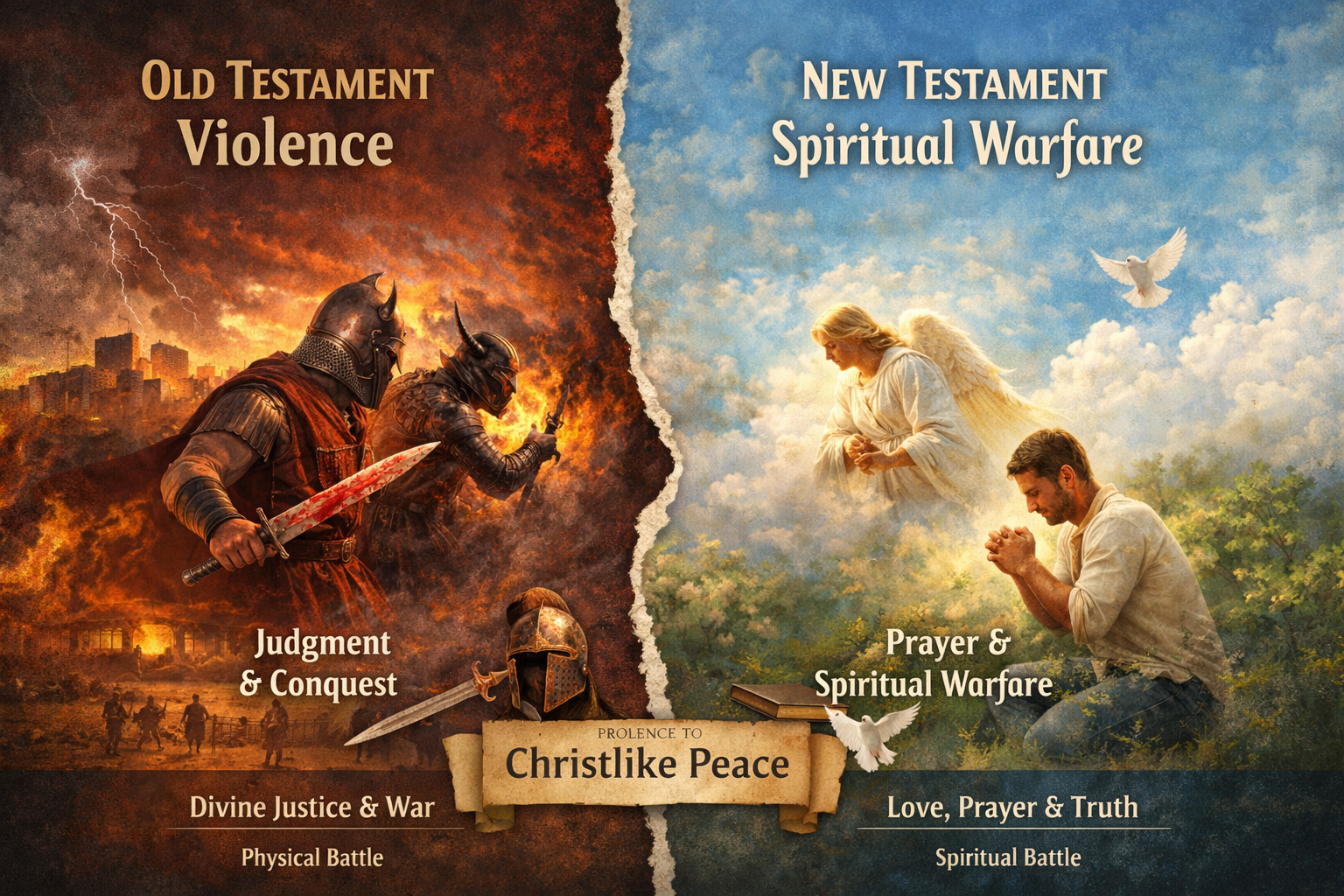
Wrestling with Old Testament Violence and New Testament Spiritual Warfare
These difficult passages challenge us to wrestle with divine justice, human violence, and God’s redemptive purposes in history. We must recognize that these were specific commands for a unique time in redemptive history, establishing Israel in the land through whom the Messiah would come, not universal principles for God’s people to follow in every age. In the New Testament era, Christians are explicitly commanded to love enemies, pray for persecutors, and overcome evil with good. Our “warfare” is spiritual, not physical, as we battle against spiritual forces with weapons of prayer, truth, and righteousness.
Christlike Peace Beyond Old Testament Conquest
Today’s application involves recognizing that while God used Israel as an instrument of judgment in that specific historical context, He has not given modern nations or individuals similar mandates. We must resist the temptation to justify contemporary violence by selectively applying Old Testament conquest narratives. Instead, we should follow Christ’s example of sacrificial love, work for justice through peaceful means, and trust that God remains the ultimate judge who will settle all accounts in His perfect timing. When facing a world torn by geopolitical conflicts and kinetic wars, we’re called to be peacemakers who reflect Christ’s kingdom values rather than perpetuating cycles of violence and retaliation.
Prayer for Those Affected by War and Violence Condoned By God
Prayer for Wisdom on Biblical War and Peace
Jehovah God, we come before You with humble hearts, seeking knowledge and wisdom to understand the difficult realities of war and violence that appear in Your Word and continue to plague our world today. We acknowledge that You are the righteous Judge who sees all things, whose ways are higher than our ways and whose thoughts transcend our understanding. As those affected by war and violence condoned in Scripture wrestle with these troubling passages, grant them the spiritual insight to discern Your redemptive purposes even in judgment, and help them see that the conquest narratives were specific to a unique moment in history when You were establishing the nation through whom the Messiah would bring salvation to all peoples. Give them clarity to distinguish between Your judgments in ancient times and the calling You have given Your people today to be ambassadors of peace and reconciliation.
Trusting God Amid Global Conflict
Father, we recognize that we live in a world where the Global Risks Report of 2026 identifies geopolitical and geoeconomic risks as dominant concerns, with state-based armed conflict, kinetic wars, and economic weapons driving global fragmentation. In the midst of these mounting tensions and the real threat of violence, help those affected to trust in Your sovereignty even when Your ways seem mysterious and difficult. Just as You showed patience with the Canaanite nations for centuries before bringing judgment, remind us that You are slow to anger and abundant in mercy. Grant wisdom to discern when to speak truth about the unique historical context of Old Testament conquest commands, and when to simply sit in compassionate silence with those whose hearts are breaking under the weight of modern warfare and its devastating consequences.
Holding Justice and Mercy in the Difficult Texts
Lord, we pray for the grace to hold both divine justice and divine mercy in tension, understanding that You abhor wickedness while loving humanity with an everlasting love. For those who struggle to reconcile the God of judgment in these passages with the God revealed fully in Jesus Christ, illumine their understanding through Your Spirit. Help them see that even in these difficult texts, Your ultimate purpose was protecting the channel through whom redemption would come to all nations, the very redemption we now enjoy through Christ. May this understanding not produce callousness toward violence but deeper compassion for all who suffer under the sword, whether in ancient times or in our contemporary world of fragmenting geopolitical alliances.
Supernatural Wisdom for Peacemaking in a Violent World
Finally, Heavenly Father, we ask that You would grant supernatural wisdom to navigate our modern context where wars continue to rage and violence seems condoned by human powers and political systems. Help those affected by these realities to remember that in Christ, the way of the Kingdom is radically different, loving enemies, blessing persecutors, and overcoming evil with good. May they find their security not in military might or economic weapons but in Your faithful promises and protective care. Teach them to be peacemakers who reflect Christ’s self-sacrificial love even as they wrestle honestly with the hard questions these Scriptures raise, trusting that You will one day make all things right and wipe every tear from every eye.
In Jesus’ Name We Pray, Amen.
Modern-Day Journeys of Spiritual Israel
Spiritual Israel, the global community of believers in Christ, faces several profound journeys in today’s world that parallel, in spiritual terms, the challenges faced by ancient Israel. Although you may not face physical war and violence on your individual journey, here is a list of eight things you may face instead.
1. The Journey Through Cultural Wilderness
Like Israel wandering through the desert, Christians today navigate a secular culture that often feels barren of spiritual truth. Believers must maintain faith while surrounded by materialism, moral relativism, and the diminishing influence of Christian values in public life. This journey requires daily dependence on God’s provision (spiritual “manna”) through Scripture, prayer, and community, resisting the temptation to return to former ways of living or to compromise convictions for cultural acceptance.
2. The Exodus from Spiritual Bondage
Many believers are on a journey out of various forms of slavery, addiction, toxic relationships, destructive thought patterns, religious legalism, or consumerism. Like the Israelites leaving Egypt, this exodus requires faith to step into the unknown, trusting God’s deliverance even when the “chariots” of old habits and temptations pursue them. The journey involves learning to live as free people rather than with a slave mentality, embracing their identity as God’s children.
3. The Babylonian Exile Experience
Christians living as minorities in increasingly post-Christian or hostile societies experience a type of exile, maintaining faith while “in Babylon but not of it.” This includes believers in secularized Western nations, those facing persecution in restricted countries, and refugees displaced by war. The challenge is to remain faithful, preserve spiritual identity, contribute positively to society, yet refuse to assimilate into values that contradict their faith, much like Daniel and his friends.
4. The Journey Toward the Promised Rest
Hebrews speaks of a “rest” that remains for God’s people. Modern believers journey toward the fulfillment of God’s promises, both the ultimate promise of eternal life and present promises of peace, purpose, and spiritual fruitfulness. This involves entering by faith into what God has already provided in Christ, overcoming unbelief, and “possessing their possessions”, living in the fullness of their inheritance rather than merely surviving spiritually.
5. The Mission Journey to the Nations
Spiritual Israel is on a Great Commission journey, called to be light to the nations as Israel was meant to be. This includes cross-cultural missions, urban ministry, engagement with digital mission fields, and bearing witness in increasingly pluralistic societies. Like Paul’s missionary journeys, this involves crossing boundaries, geographic, cultural, ethnic, and socioeconomic, to share the gospel, often facing opposition, misunderstanding, and sacrifice.
6. The Internal Journey of Transformation
Perhaps the most universal journey is the ongoing sanctification process, the “renewing of the mind” and transformation into Christ’s image. This inner journey involves confronting personal sin, healing from trauma, developing spiritual maturity, and learning to walk by the Spirit. It’s the journey from spiritual infancy to maturity, from self-centeredness to Christ-centeredness, often requiring passage through “valleys of shadow” where faith is refined.
7. The Journey Through Fragmentation Toward Unity
The global church faces the challenge of maintaining spiritual unity amid denominational divisions, theological disagreements, cultural differences, and the geopolitical fragmentation mentioned in your earlier question. The journey involves learning to honor the “one body” while respecting diversity, pursuing reconciliation across racial and ethnic lines, and resisting the tribalism that characterizes the broader culture.
8. The Technological Wilderness
A distinctly modern journey involves navigating the digital age, discerning truth from misinformation, maintaining authentic community in an age of virtual relationships, stewarding attention in an economy designed for distraction, and using technology redemptively rather than being enslaved by it. This uncharted territory requires wisdom that previous generations didn’t need.
Trusting the Journey to the Kingdom
Each of these journeys requires the same fundamental posture ancient Israel was called to: trust in God’s faithfulness, obedience to His word, dependence on His provision, and hope in His promises. The destination isn’t ultimately a physical land but the fullness of life in Christ and the coming Kingdom of God.
What specific aspect of these journeys resonates most with your current experience or interests? Leave your comments below.
Leave a Reply